A teacher has lost 15 students in the current school year because of the raids
The drama and pain of a teacher who has seen her students disappear from classrooms in LAUSD
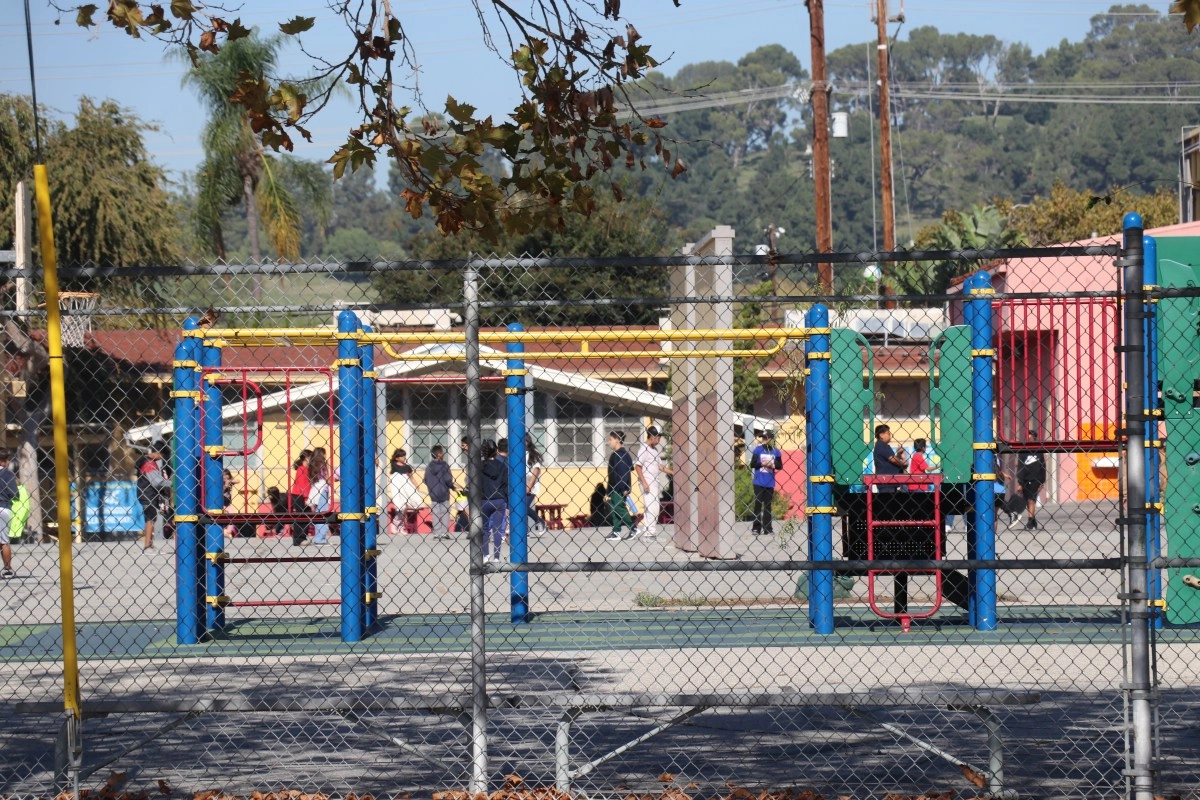
“Delia Ramirez,” a high school teacher in the Los Angeles Unified School District (LAUSD), has witnessed the drama and pain caused by family separation in the lives of approximately 70 of her students since 2016 due to deportations under President Donald Trump's administration. Trump.
A week before leaving for Christmas and New Year's vacation, one of Ms. Delia's students was waiting for her in the school elevator.
“Crying inconsolably, the girl told me that her cousin had been detained in Long Beach, and that in less than 24 hours he had been deported to Tijuana,” the teacher said. “This new experience left me deeply affected.”
According to the teacher, immigration agents told the boy—a corn vendor—that he had no rights in the United States.
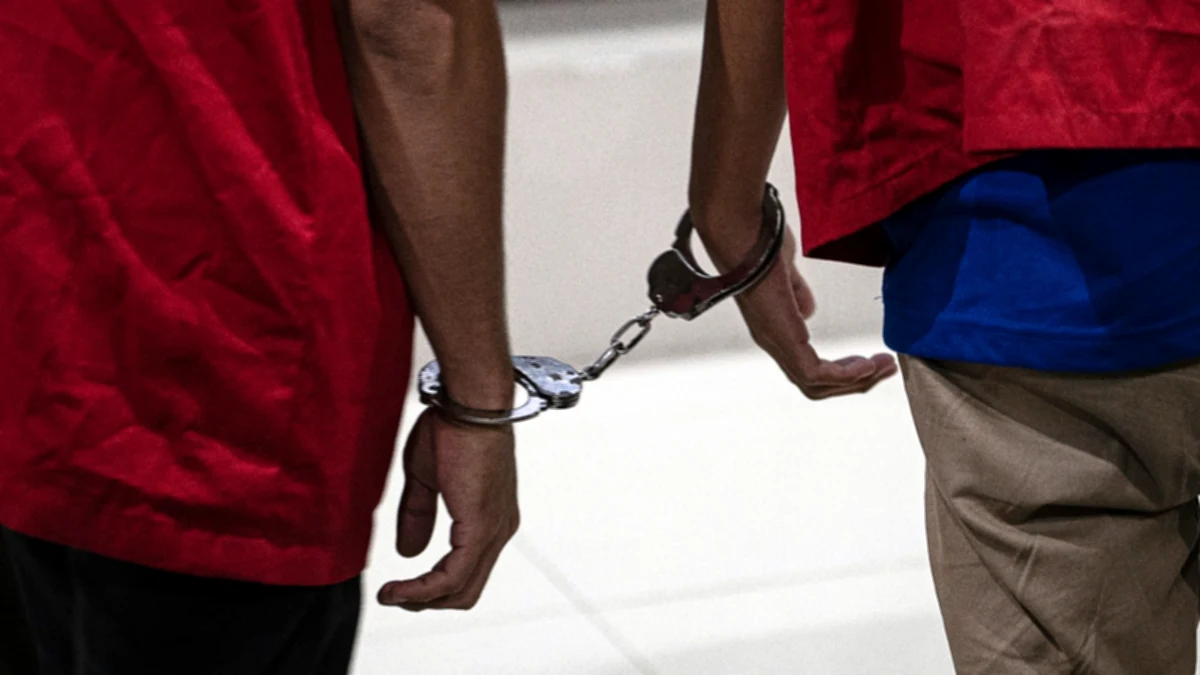
“They humiliated him quite a bit,” she reported. “They intimidated him until he decided to sign his release. That’s what many are doing; the situation is very difficult and nobody wants to die in ICE detention centers.”
Seven Deaths in Four Days
This year, at least 30 people have died in the custody of U.S. Immigration and Customs Enforcement (ICE).
Seven of the 68,000 people detained by ICE died this month, and four of them in a span of four days, making December the deadliest month of detainees during Trump’s second term. This is a record high since 2004, when 28 deaths occurred, according to ICE’s own records.
In notifications about the detainees’ deaths, ICE reported the passing of two men: Fouad Saeed Abdulkadir, 46, from Eritrea, who had been detained for 215 days; and Nenko Stanev Gantchev, 56, originally from Bulgaria.
Fouad Saeed Abdulkadir died on December 14 at the Moshannon Valley Immigrant Processing Center, located in Clearfield County, Philadelphia.
According to an ICE press release, Abdulkadir,A Muslim man with a U.S. green card complained of chest pains before his death and received CPR after being taken to a hospital. The cause of his death is under investigation. Meanwhile, Nenko Staney Gantchev, a Bulgarian man, reportedly died on December 15 of “natural causes” at the North Lake Processing Center in Baldwin, Michigan. Five others have died in hospitals. The most recent, Dalvin Francisco Rodriguez, 39, originally from Nicaragua, was found without a pulse at the Adams County Correctional Center in Mississippi and was pronounced dead 10 days later. “Unfortunately, all the students who have seen a family member or someone they know deported are going to live in a permanent state of crisis,” said Miguel Tinker Salas, professor emeritus of Chicano Studies at Pomona College. “They will live with the constant awareness of who is following them, who is watching them.”
“This is a way of criminalizing the entire society, seeking to create a hierarchy where Latinos no longer have the ability to develop publicly in the way we are becoming and living. Now, immigrants are criminalized and subjected to constant surveillance.”
Fewer Students in LAUSD
In fact, the damage caused by each of the repressive measures against immigrants has resulted in a sharp decline in enrollment of newly arrived students in the United States in LAUSD.
According to data from the second-largest school district in the country, total enrollment in the district's 783 schools was 398,487 students for the 2025-26 academic year. This represents a decrease of 9,596 students compared to the previous year and a drop of 21,262 students lost by the district compared to the 2023-24 school year. The decline is much more noticeable among immigrants. The number of English as a Second Language (ESL) students fell from 75,000 last year to nearly 62,000 this year, with Latino students accounting for the majority of this decline. In 2018, enrollment was over 157,000 English as a Second Language learners. This means the population has been cut almost in half in the last seven years. Teacher Delia Ramirez stated that, in the current school year, in her six history classes, at least 15 students stopped attending school for fear of raids. One of them, even though he was a U.S. citizen, decided to self-deport along with his family. “Work has become difficult for them; fear is stronger, and our children are living with a lot of stress,” the teacher said.“It pains me greatly to see them leave, but I understand the way the parents and their children think. Nobody wants to end up in ICE detention centers.” He added that “it is important” to pay attention to what the Donald Trump administration is doing, “because ultimately, his administration wants to carry out ethnic cleansing of people of color, and in the face of this, we must be prepared to organize and defend ourselves, because this will continue, and they will not stop until we stop them ourselves.” Professor Tinker Salas opined that the Latino population that at one point supported Trump has realized the mistake they made in voting for him and the lie in his rhetoric that he would arrest the most dangerous criminals. “They realized the falsehood, and solidarity among ethnic groups—Salvadorans with Mexicans, with Nicaraguans, Haitians, African Americans, and Asians—is urgent, to understand that we are all in the same situation and we will all survive.” “We all go down.”
“Yes, we can defend ourselves.”
Ron Gochez, a member of Union del Barrio, the organization that began the self-defense of the Latino community against the cruel immigration raids, highlighted that the work of the community patrols and their more than 1,500 members has improved, and that arrests and deportations in Los Angeles have decreased.
“Our resistance has expanded to San Francisco and Oakland,” said the activist, for whom the best lesson learned from the ICE raids—which intensified in the United States since June 6—is that, “yes, we can defend ourselves, if we organize.”
Gochez warned that the raids will not stop during the remainder of Donald Trump’s term in the White House.
However, he observed that, in the last six months, in Los Angeles and other cities across the country besieged by the Despite the brutality and violence of ICE and CBP agents, people are better organized. “There have been fewer arrests and deportations in places where we’ve seen the heaviest attacks, but there hasn’t been the kind of resistance that was seen in Los Angeles,” Gochez said. “That tells us that the resistance is going to be long-term and that communities have to organize better so they can defend themselves.”until we stop them ourselves.”
Professor Tinker Salas opined that the Latino population, which at one point supported Trump, has realized the mistake they made in voting for him and the lie in his speech that he would arrest the most dangerous criminals.
“They realized the falsehood, and solidarity among ethnic groups—Salvadorans with Mexicans, with Nicaraguans, Haitians, African Americans, and Asians—is urgent, to understand that we are all in the same situation and we either all survive or we all sink.”
“Yes, we can defend ourselves.”
Ron Gochez, a member of Union del Barrio, the organization that began the self-defense of the Latino community against the cruel immigration raids, highlighted that the work of the community patrols and their more than 1,500 members has improved, and that arrests and deportations in Los Angeles have decreased.
“Our resistance has expanded to San Francisco and Oakland,” said the activist, for whom the best lesson learned from the ICE raids—which intensified across the United States starting June 6—is that “we can defend ourselves if we organize.” Gochez warned that the raids will not stop during the remainder of Donald Trump’s term in the White House. However, he observed that in the last six months, in Los Angeles and other cities across the country besieged by the brutality and violence of ICE and CBP agents, people are better organized. “There have been fewer arrests and deportations in places where we’ve seen the heaviest attacks, but there hasn’t been the kind of resistance that was seen in Los Angeles,” Gochez said. “That lets us know that the resistance is long-term and that communities need to organize themselves better so they can defend themselves.”until we stop them ourselves.”
Professor Tinker Salas opined that the Latino population, which at one point supported Trump, has realized the mistake they made in voting for him and the lie in his speech that he would arrest the most dangerous criminals.
“They realized the falsehood, and solidarity among ethnic groups—Salvadorans with Mexicans, with Nicaraguans, Haitians, African Americans, and Asians—is urgent, to understand that we are all in the same situation and we either all survive or we all sink.”
“Yes, we can defend ourselves.”
Ron Gochez, a member of Union del Barrio, the organization that began the self-defense of the Latino community against the cruel immigration raids, highlighted that the work of the community patrols and their more than 1,500 members has improved, and that arrests and deportations in Los Angeles have decreased.
“Our resistance has expanded to San Francisco and Oakland,” said the activist, for whom the best lesson learned from the ICE raids—which intensified across the United States starting June 6—is that “we can defend ourselves if we organize.” Gochez warned that the raids will not stop during the remainder of Donald Trump’s term in the White House. However, he observed that in the last six months, in Los Angeles and other cities across the country besieged by the brutality and violence of ICE and CBP agents, people are better organized. “There have been fewer arrests and deportations in places where we’ve seen the heaviest attacks, but there hasn’t been the kind of resistance that was seen in Los Angeles,” Gochez said. “That lets us know that the resistance is long-term and that communities need to organize themselves better so they can defend themselves.”“Our resistance has expanded to San Francisco and Oakland,” said the activist, for whom the best lesson learned from the ICE raids—which intensified across the United States starting June 6—is that “we can defend ourselves if we organize.” Gochez warned that the raids will not stop during the remainder of Donald Trump’s term in the White House. However, he observed that in the last six months, in Los Angeles and other cities across the country besieged by the brutality and violence of ICE and CBP agents, people are better organized. “There have been fewer arrests and deportations in places where we’ve seen the heaviest attacks, but there hasn’t been the kind of resistance that was seen in Los Angeles,” Gochez said. “That tells us that the resistance is a long-term effort and that communities need to organize themselves better so they can defend themselves.”“Our resistance has expanded to San Francisco and Oakland,” said the activist, for whom the best lesson learned from the ICE raids—which intensified across the United States starting June 6—is that “we can defend ourselves if we organize.” Gochez warned that the raids will not stop during the remainder of Donald Trump’s term in the White House. However, he observed that in the last six months, in Los Angeles and other cities across the country besieged by the brutality and violence of ICE and CBP agents, people are better organized. “There have been fewer arrests and deportations in places where we’ve seen the heaviest attacks, but there hasn’t been the kind of resistance that was seen in Los Angeles,” Gochez said. “That tells us that the resistance is a long-term effort and that communities need to organize themselves better so they can defend themselves.”
This news has been tken from authentic news syndicates and agencies and only the wordings has been changed keeping the menaing intact. We have not done personal research yet and do not guarantee the complete genuinity and request you to verify from other sources too.