
After weeks of monitoring, the World Meteorological Organization (WMO) confirmed in a statement the probability of 80% that an episode of strong El Niño intensity will be established between June and August, due to unusually warm ocean waters and strong underground warming. Likewise, the organization announced the probability of around 90% that these conditions will be consolidated until next November.
“There remains uncertainty about the exact moment and intensity of the peak,” Bárbara Tapia Cortes, Technical Services Coordinator at the WMO Regional Office for the Americas, based in Asunción (Paraguay), told DW.
This is because this peak moment will depend on the interaction of the ocean and the atmosphere in the coming months, as well as the evolution of underground heat, winds and other climatic factors. For this reason, the Chilean meteorologist also points to September to have more clarity about the “probable intensity, timing and persistence of the event.”
In any case, Latin America will be one of the regions most affected by this new phenomenon of what we know as “El Niño”, the warm phase of the El Niño-Southern Oscillation (ENSO) phenomenon, whose counterpart and cold phase is known as “La Niña”.
"El Niño has a large influence on Latin America due to its proximity and is generally known to cause drought in northern regions, while increasing wet conditions in the south and northwest. Much of the continent is also likely to experience periods of intense heat during and after the peak of El Niño," Ben Clarke, a researcher specializing in extreme weather events and climate change at Imperial College London, tells DW.
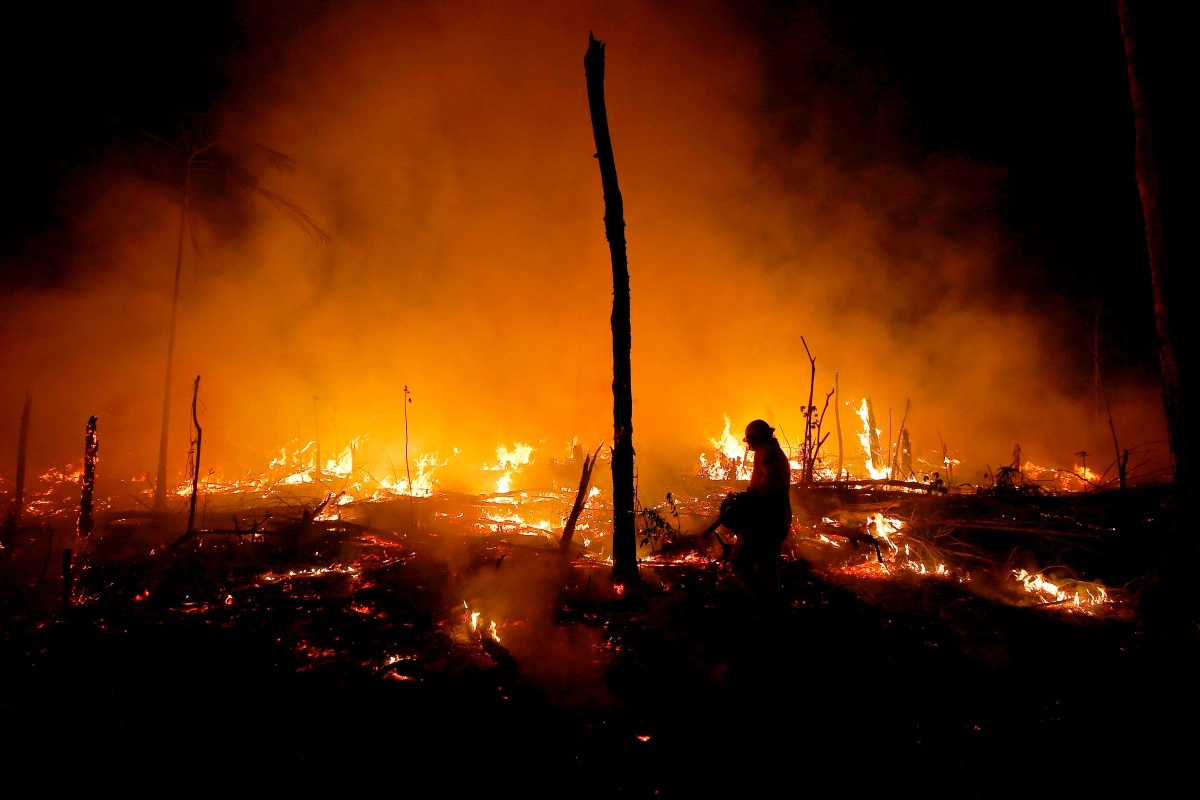
Likewise, it warns that these hot and dry conditions can cause a considerable increase in the risk of forest fires. “This can have enormous repercussions on biodiversity, drastically reduce air quality and convert one of the main carbon sinks in the world (Brazil) into a carbon source,” laments the researcher without ignoring the other side of the coin of the phenomenon.
“We know that these conditions increase the likelihood of dangerous heavy rainfall in northwestern South America, especially along the coasts of Peru and Ecuador, and in southern South America, particularly in southern Brazil, Uruguay and northern Argentina,” he adds.
Agriculture and fishing, impacted
These impacts will have consequences in the primary sector. "Agriculture will suffer increased production costs as a result of various conditions, such as water restrictions for crops, damage to infrastructure caused by flooding, increased pests and diseases, and increased risks to food security and reduced income, especially for rural family households," Isabel Mesquita, regional coordinator for Latin America and the Caribbean at the Global Landscape Forum, told DW.
Corn and beans in Central America and soybeans in Brazil, along with rice, coffee, sugar cane and cocoa, will be the most affected crops, according to this specialist who also points to damage to livestock activities.
“The repercussions for fisheries can be considerable, especially along the Pacific coast in countries such as Peru and Ecuador,” adds Jack O'Connor, senior researcher at the United Nations University Institute for Environment and Human Security (UNU-EHS) based in Bonn, Germany, to DW. Thus, it highlights the significant changes in ocean currents. "As a consequence, small fish such as anchovies could have difficulty accessing the nutrients they need to survive. This in turn affects larger species that depend on them as a food source," he adds.
Information for prevention
Despite all this, the specialists consulted by DW agree on the advantage of having data in advance. "Unlike a hurricane, El Niño can be monitored and predicted months in advance. This window of time allows governments to move from a reactive approach to anticipatory action," says Tapia.
"We have unusually early and strong forecasts about what could happen. This gives us the opportunity to adopt more climate-resilient crop varieties and better prepare our water infrastructure to cope with the extreme conditions predicted," O'Connor believes.
Thus, “Governments can update contingency plans, reinforce monitoring of droughts, heavy rains, floods, heat waves and forest fires, and coordinate preparedness measures in meteorology, disaster risk management, agriculture, water, health, energy and social protection,” complements the Chilean meteorologist.
In this sense, and taking into account that El Niño tends to alter the distribution of water on the continent, Clarke is committed to preventive measures such as storing water for regions prone to drought and preparing for floods.
For its part, and to avoid the worst consequences of these impacts on crops, Mesquida recommends actions that range from soil restoration, ecosystem conservation, access to climate information and early warning systems, to the expansion of rural financing, crop insurance, credit and social protection systems for small farmers.
More generally, O’Connor, in addition to advocating for smarter, climate-adapted agricultural practices, urges people to consume more sustainably produced food and reduce dependence on fossil fuels, “one of the main drivers of climate change and the extreme weather events we are already experiencing.”