
For more than a year, Elias Padilla was saving to travel as an undocumented immigrant from Honduras to the United States.
As an Uber driver on the congested streets of the capital, In Tegucigalpa, saving money has not been easy. On bad days, he earns as little as $12 in 12 hours.
However, now his plans are on hold.
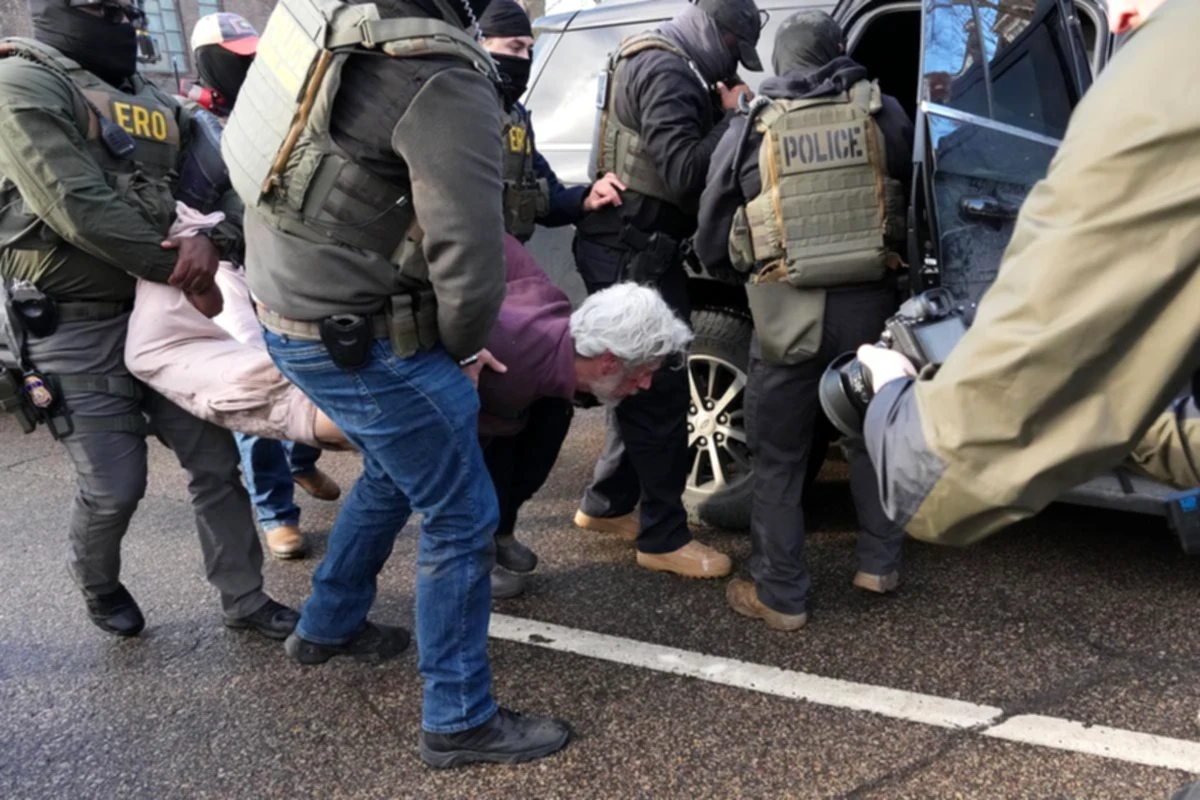
Images of undocumented immigrants in major US cities being dragged away by Immigration and Customs Enforcement (ICE) agents, their wrists bound with plastic straps, have deterred at least one potential Central American immigrant from traveling north.
“I want to improve my living conditions because we earn very little here,” Elias explained as we drove through the city.
“For example, an Uber driver in the US earns in one hour what I would earn in a day,” he added.
Like most Honduran immigrants, Elias stated that his main goal in coming to the US would be to send remittances home.
“But I see what Trump is doing, and it has made me think twice,” he admitted.
“I'm going to wait and see what the change of government “I hope things improve,” he said, referring to the recent Honduran presidential elections. Elias's change of heart will undoubtedly be good news for the architects of President Trump's immigration policies, including border czar Tom Homan and national security advisor Stephen Miller. In addition to expelling undocumented immigrants from US territory, the controversial ICE operations in Los Angeles, Chicago, Charlotte, and Minneapolis have always aimed to deter people like Elias from even attempting to leave Honduras. However, these policies have brought an unexpected benefit to the Honduran economy:The thousands of Hondurans living undocumented and discreetly in these cities are sending home more remittances than ever before.Because many undocumented Hondurans share a sense of an impending threat or a deadline regarding their future, many are trying to send every spare dollar to their families before it's too late.
Between January and October of this year, there was a 26% increase in remittances to Honduras compared to the same period last year.
In fact, although their numbers are decreasing in the US, Hondurans increased the amount they sent home from US$9.7 billion for all of 2024 to more than US$10.1 billion in just the first nine months of this year.
The BBC spoke by phone to one of them, Marcos (a pseudonym), from a major US city where he has lived for five years, working in construction.
“Most of the money “What I send home is so my family can cover their basic needs, like food. But also so they can save some money to buy a small plot of land where we can build a house or maybe a car,” he explained. Since Trump took office, Marcos only keeps the bare minimum for rent and food in the US Everything else goes to Honduras, he said. He has steadily increased the amount he sends to his wife and two children in the Honduran capital, Tegucigalpa, “from $500 a month to more than $300 a week,” he said. The builder also tried to send even more in December to cover Christmas expenses. “It's like a race against time” to send home as much as possible before getting caught in an ICE raid, Marcos said. “I used to think about bringing my family here. Now, with everything that's happening with Trump and ICE and so much fear in the “I just want to make sure that if I get arrested, there's some money saved up there,” he said. In part, he added, he is also trying to prepare for the eventuality of his arrest, knowing that his family won't be able to rely on him for support if he's in a detention center for two months. Other victims: But Trump's policies aren't just affecting the formal economy through remittances. The illegal economy, through human trafficking, has also been impacted. Jimmy (not his real name) is a former coyote, or human smuggler, who agreed to speak to the BBC at a location on the outskirts of the capital. For 20 years, he made a living transporting people across Mexico, generally considered the most dangerous leg of the journey. It is an illegal industry run primarily by Mexican organized crime groups, Although Jimmy claimed not to have worked specifically for any of the major cartels, he acknowledged that he operated with their knowledge and approval. Today, he said, potential clients are discovering that “the price has doubled, from $12,000 to $13,000 per person to about $25,000 to $30,000.” “However, people are still coming in. It was much more with the CBP One app (a Biden-era legal pathway for asylum applications), but maybe 40% are still achieving their goal,” he said. Fewer people are leaving because “not everyone can afford” the high costs, he added. Among the latter is Uber driver Elias Padilla. After working hard and selling personal belongings to raise the funds, Elias simply cannot afford the risk of being deported shortly after arriving in the USAlthough Knowing that his chances of successfully settling in the US have diminished under Trump, Elias said he has no choice but to wait, either for the current wave of ICE raids to end or for Trump's presidency to end. Central American migrants have been victims of all kinds of hardline policies over the years, he added, both from regional governments and Washington. With the economic outlook in Honduras still bleak, Elias believes there are few things that can keep people back for long. Not even the current repression.
“Trump has only postponed my plans. He hasn't canceled them,” she concluded.