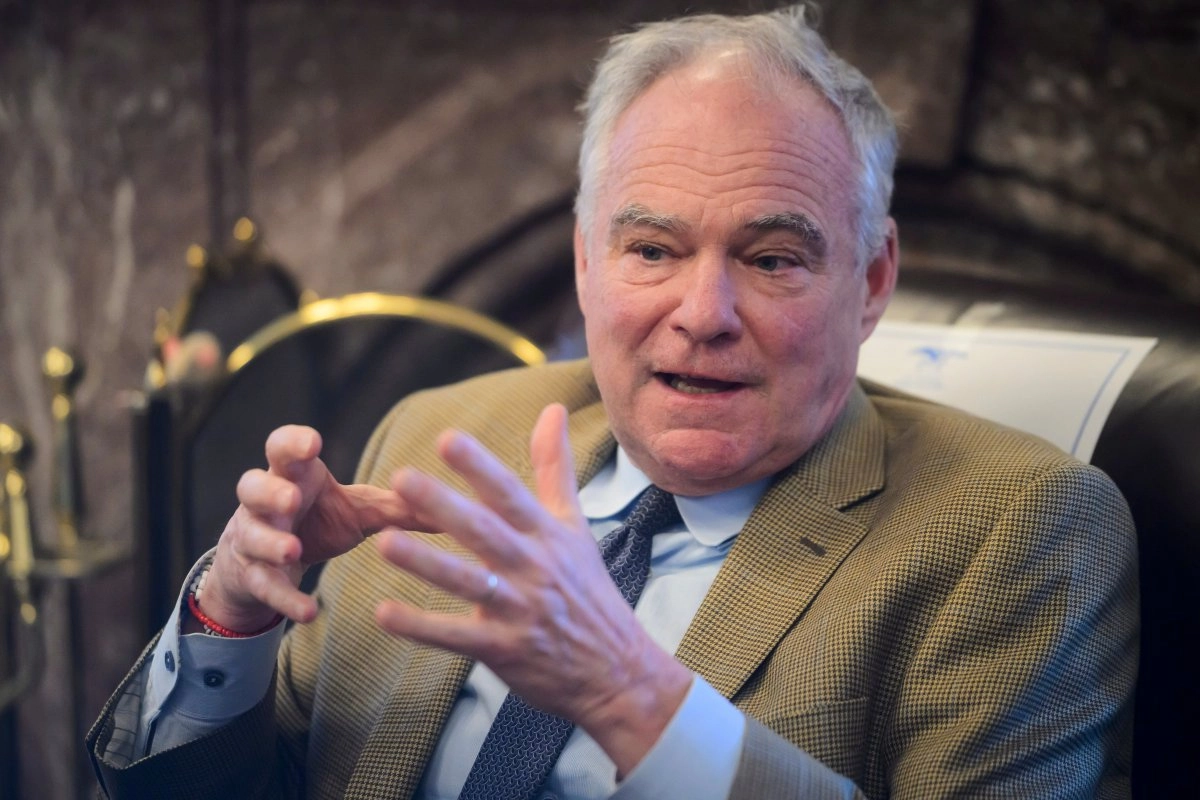

Virginia Democratic Senator Tim Kaine cast doubt on the reasons behind Gen. Chris Donahue's departure from the U.S. Army and suggested that Defense Secretary Pete Hegseth's decisions could be influenced by personal resentment toward the military establishment in which he served before joining President Donald Trump's administration.
Kaine's statements come amid growing controversy over the restructuring of Pentagon leadership, after Donahue, commander of the US Army in Europe and Africa, submitted his request to retire after just over a year in office. The Army confirmed that he will officially leave command on July 2.
During an interview on CBS News' Face the Nation, Kaine questioned whether Hegseth is pushing away officers who express independent opinions to surround himself with like-minded collaborators. "Is he expelling those who tell the truth to surround himself with sycophants? It seems that the secretary is being particularly harsh on the Army," said the legislator, a member of the Senate Armed Services Committee.
Kaine also recalled that Hegseth has publicly expressed on several occasions his dissatisfaction with the way he was treated during his military service, which, in his opinion, fuels doubts about whether some of the recent dismissals are due to personal reasons rather than institutional needs.
Doubts grow over changes in military leadership
Donahue's departure represents the latest in a series of moves that have shaken up the military leadership since Hegseth took over as head of the Defense Department. Among the senior commanders who also left their positions were General Charles Q. Brown Jr., former chairman of the Joint Chiefs of Staff; Admiral Lisa Franchetti, former Chief of Naval Operations; Admiral Linda Fagan, former commandant of the Coast Guard; as well as General Randy George and General James Mingus, both members of the Army leadership.
Donahue was considered one of the most prestigious officers in the Armed Forces and had received recognition for his operational career, including his participation in the US military withdrawal from Afghanistan in 2021.
The lack of public explanations for his departure has generated concern among legislators of both parties, who demand greater transparency from the Pentagon.
Congress studies imposing new safeguards
Kaine assured that the Armed Services Committee has not yet received satisfactory answers about the reasons that led to the general's departure and announced that Congress could promote new measures to supervise the dismissals of senior officers.
As part of the debate on the upcoming National Defense Authorization Act (NDAA), legislators are analyzing establishing mechanisms that would require the Pentagon to justify in writing to Congress any dismissal or release of senior military commanders within a period of five days.
The senator stated that, if the explanations continue to be insufficient, there is the possibility of building a bipartisan consensus to strengthen controls over these types of decisions. The criticism doesn't just come from Democrats. Republican Senator Thom Tillis called Donahue's departure an “unforced error” and accused Hegseth of exercising excessive oversight over the military structure, prioritizing political loyalty over professional experience.
In contrast, Republican Representative Clay Higgins called for avoiding jumping to conclusions and maintained that all the facts must first be known before questioning decisions made by the Department of Defense chain of command. The controversy keeps attention on the Pentagon as Congress moves forward in discussing the budget and defense policy for the next fiscal year, a process in which the management of military leadership could become one of the central issues of the debate.