Sunrise:
Sunset:
°C
Follow Us

Trump wants Venezuela's oil: what price will he pay and how long will he have to wait to get it

The US president stated that his country's oil companies will invest billions in Venezuelan oil production
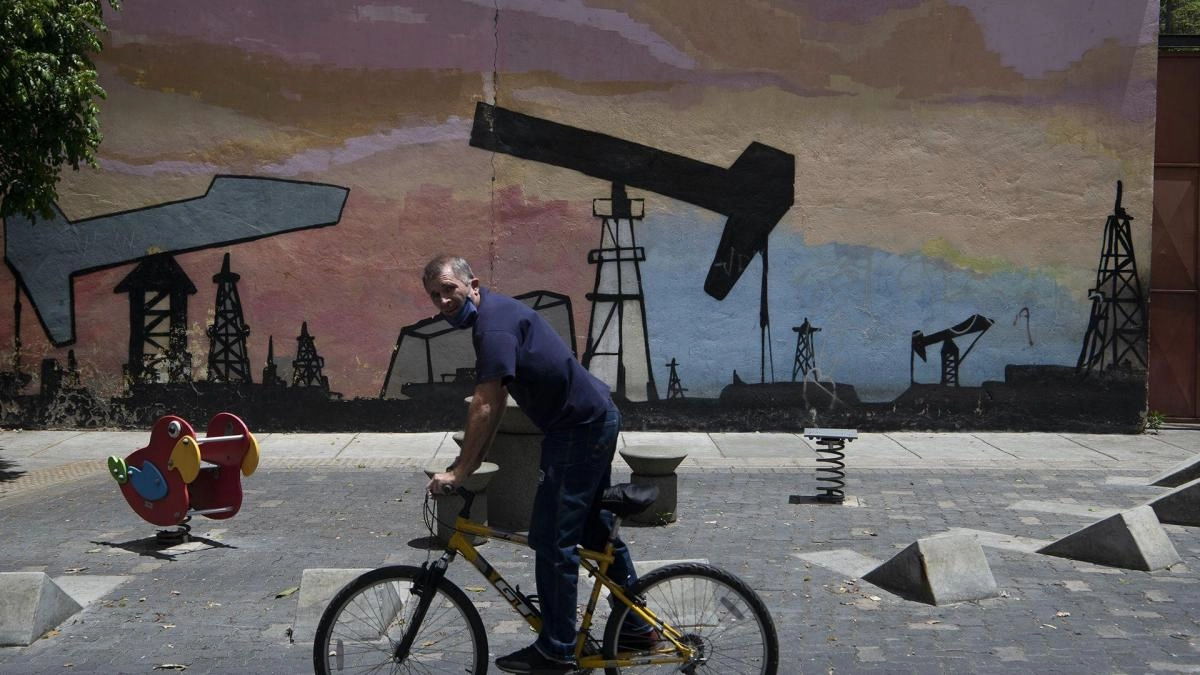
Trump wants Venezuela039s oil what price will he pay and how long will he have to wait to get it
Time to Read 5 Min

Donald Trump made clear his intention to take advantage of Venezuela's oil reserves after his military incursion and the arrest of President Nicolas Maduro, stating that the US will "administer" the country until there is a "safe" transition.

The US president wants oil American companies will invest billions of dollars in the South American nation, which has the world's largest oil reserves, to revive this currently underutilized resource.

Trump stated that US companies will repair the "badly damaged" oil infrastructure and "start making money for the country."

But experts warn of the immense challenges facing Trump's plan, noting that it will cost billions and take up to a decade to achieve significant oil production.

So, can the US really take control of Venezuela's oil reserves?

And will Trump's plan work?

With approximately 303 billion barrels, Venezuela boasts the world's largest proven oil reserves.

But the amount of crude the country currently produces is tiny compared to this wealth.

Production has fallen sharply since the early 2000s, when former President Hugo Chavez and then the Maduro government tightened their grip on state-owned PDVSA, prompting an exodus of its most skilled personnel.

Although several oil companies, including US-based Chevron, remain active in the country, their operations have contracted significantly as Washington expanded sanctions and intercepted crude exports with a view to restricting Maduro's access to a key economic resource.

The sanctions—first imposed in 2015 under President Barack Obama for alleged human rights violations—have also left Venezuela unhappy with investment and spare parts needed for this industry.

“The real challenge they face is their infrastructure,” says Callum MacPherson, head of commodity quoting at Investec (an Anglo-South African international banking and wealth management company).

In November,Venezuela produced approximately 860,000 barrels per day, according to the latest report from the International Energy Agency.

That is barely a third of what it was 10 years ago and represents less than 1% of global oil consumption.

The Political Situation

The country's reserves are made up of so-called “heavy, sour” oil. It is difficult to refine but useful in the production of diesel and asphalt. The United States typically produces the “light, sweet” crude oil ideal for gasoline. In anticipation of the attacks and capture of Maduro, the US also seized two oil tankers off the coast of Venezuela and imposed a blockade on the entry and exit of sanctioned tankers. Homayoun Falakshahi, principal commodity price at the Kpler data analyst platform, indicates that the key obstacles for oil companies hoping to exploit Venezuelan reserves are legal and political. Speaking to the BBC, the analyst said that those hoping to drill in Venezuela will have to reach an agreement with the government, which will not be possible until there is a successor to Maduro in office. According to Falakshahi, companies would then be risking billions of dollars in investments on the stability of a future Venezuelan government. “Even if the political situation is stable, it is a process that will take months,” I concluded.

Companies hoping to take advantage of Trump's plan would need to sign contracts with the new government once it is in place, before beginning the process of increasing infrastructure investment in Venezuela.

Analysts also warn that it will take tens of billions of dollars—and potentially a decade—to restore Venezuela's previous production levels.

Neil Shearing, chief analyst at Capital Economics, noted that Trump's plans would have a limited impact on global supply and, consequently, on the price of crude.

He opined that there are “a huge number of hurdles to overcome and the timeframe for what is going to happen is very long,” suggesting that crude prices in 2026 would see very little change.

Shearing predicted that firms would not invest until a stable government was in place in Venezuela, and projects would not pay off for “many, many years”:

“The problem has always been decades of underinvestment, mismanagement, and high costs extraction.”The analyst added that even if the country returned to previous production levels of around three million barrels per day, it would still remain below the top 10 global producers. Furthermore, Shearing highlighted the high production of OPEC+ countries, saying that the world is currently “not suffering from an oil shortage.” The oil companies' bet: Former BP (British Petroleum) chief executive John Browne told BBC News that reviving Venezuela's oil industry was a “very long-term project.” “People underestimate how long it takes to get things done. “Aligning all the resources, particularly material and personnel, takes a very long time.” While there might be a “rapid increase” in some production, Browne indicated that the volume could actually decrease while the industry reorganizes. Chevron is the only US producer still active in Venezuela, after receiving an operating license under former President Joe Biden in 2022, despite US sanctions.

The company, currently responsible for approximately one-fifth of Venezuelan oil extraction, reported that it is focused on the safety of its employees and is complying “with all relevant laws and regulations.”

The other major oil firms have remained publicly silent about their plans so far, with only Chevron addressing the situation.

But Falakshahi thinks oil company bosses will be discussing internally whether to take advantage of the opportunity.

“The appetite to go somewhere is tied to two main factors: the political situation and the resources on the ground,” he said.

Despite the highly uncertain political situation, Falakshahi concluded that “the potential gain might be considered too great to pass up.”

John Browne argued that companies will want to get involved because "having business options in different parts of the world is something good." YouTube, Instagram, TikTok, X, Facebook and on our WhatsApp channel.

And remember that you can receive notifications in our app. Download the latest version and activate them.

This news has been tken from authentic news syndicates and agencies and only the wordings has been changed keeping the menaing intact. We have not done personal research yet and do not guarantee the complete genuinity and request you to verify from other sources too.

Also Read This:


Share This:


About | Terms of use | Privacy Policy | Cookie Policy