Sunrise:
Sunset:
°C
Follow Us

How long can Iran endure a war?

The Tehran regime relies primarily on its own missile and drone systems, and is not prepared to capitulate
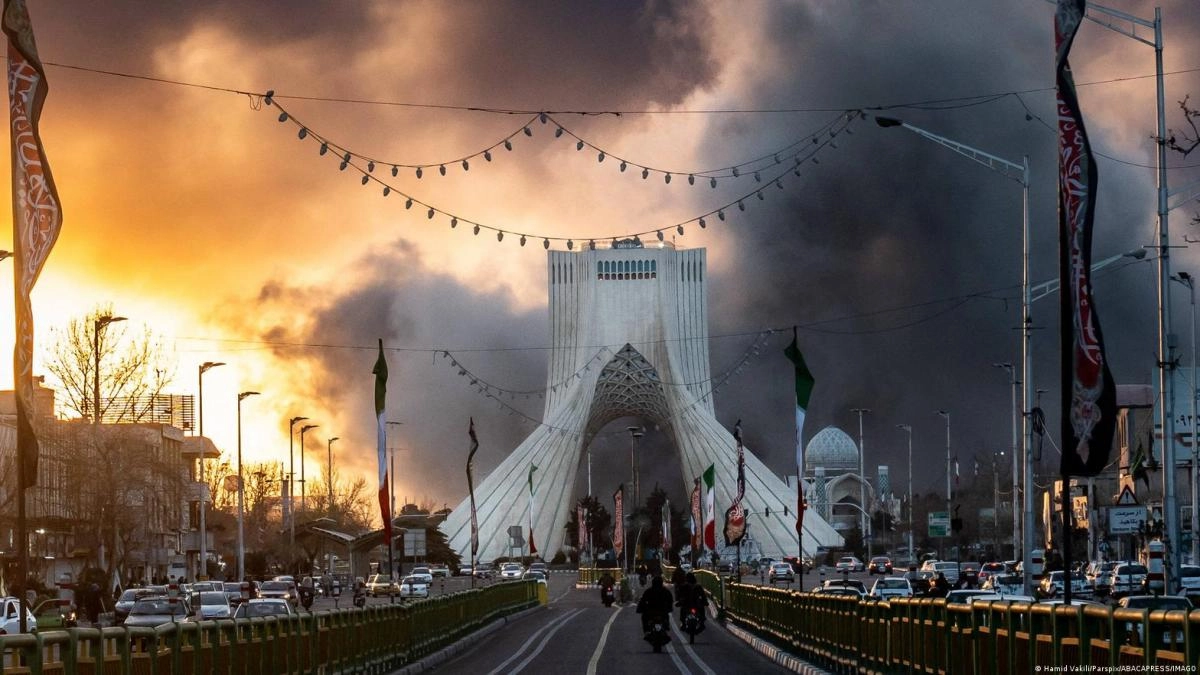
How long can Iran endure a war
Time to Read 13 Min

Unlike the United States, Iran has prepared for a long war, said Ali Larijani, secretary of Iran's Supreme National Security Council, on the third day of the standoff between Iran on one side and Israel and the United States on the other. Larijani thus repeats what other (still) officials of the Islamic Republic have been announcing since the first attack: “We will defend ourselves, whatever the cost.” Since February 28, 2016, the United States and Israel have been carrying out a coordinated and massive military offensive against Iran. The attacks are specifically targeting political leaders, as well as military and government installations. Iran responds with missile and drone attacks against Israel and against US bases in neighboring Persian Gulf countries. According to Admiral Brad Cooper, head of the US Regional Command for the Middle East (Centcom), as of Wednesday, March 4, Iran had launched more than 500 ballistic missiles and more than 2,000 drones. “We don't know exactly how many ballistic missiles and drones Iran actually possesses,” an arms expert who prefers to remain anonymous told DW. At the same time, it reaffirms a thesis that has been debated among military specialists since the beginning of the war: if Iran had not attacked Israel with hundreds of missiles in October 2024, in retaliation for the assassination of Hamas leader Ismail Haniyeh in Tehran, it would not have opened Pandora's box for itself. With that attack, Iran revealed the weakness of its long-range missile program, because these missiles were unable to accurately hit their targets. In this way, his arsenal lost deterrent potential, and the psychological threshold of a direct confrontation vanished. Logistics and Production of Missiles and Drones: At the beginning of the war, the Israeli army estimated that Iran possessed approximately 2,500 ballistic missiles. Aside from those already launched by Iran, the arsenal has likely been reduced because, since then, many others have been destroyed or buried in their storage tunnels during Israeli and US bombing raids. Satellite images circulating show attacks on missile bases in the cities of Kermanshah, Karaj, Khorramabad, and North Tabriz. Completely collapsed tunnel entrances to underground arsenals can be seen.What is unknown is how many missiles were removed from these storage facilities before the conflict and how many missile launchers remain available. On the other hand, it is believed that Iran can react flexibly regarding the rate of drone production. The facilities used for their manufacture are neither large nor easily visible. According to leaked Russian documents, Tehran can produce around 5,000 drones per month. The devices can be launched from a simple structure that can be built in a few hours. Manufacturing one of these drones, called Shahed, costs Iran several thousand dollars, while a Patriot interceptor missile costs up to three million dollars per unit. According to a New York Times analysis based on verified satellite imagery and video, Iran has damaged structures in recent days that are part of the communication and radar systems of at least seven US military bases in or near the Middle East, using its short-range missiles and drones. The attacks on these locations indicate that Iran wanted to interfere with the US military's communication and coordination capabilities. Consequences for the population and the region: “Iran will try to prolong the war and buy time,” Fawaz Gerges, professor of International Relations at the London School of Economics, told DW. "Iranian leaders have had time to plan and coordinate their actions. I think they are preparing for a long war." The Iranian regime's main objective is, essentially, resilience—the ability to withstand attacks and continue to resist. The cost of the war is borne by the Iranian population, which is defenseless against the attacks. Although the United States and Israel claim they are carrying out targeted strikes, it is almost impossible to avoid significant collateral damage in densely populated cities. According to Iranian sources, a primary school in the southern city of Minab was hit on the very first day. Iranian state media showed images on Tuesday of the mass burial of 168 children between the ages of seven and twelve, as well as their teachers. Israel has denied attacking the school, located about 40 kilometers from the Gulf of Oman, while the United States announced it would investigate the incident. What is unknown is how many missiles were removed from these depots before the conflict and how many missile launchers remain available. On the other hand, it is believed that Iran can react flexibly in terms of the rate of drone production. The facilities used for their manufacture are neither large nor easily visible. According to leaked Russian documents, Tehran can produce around 5,000 drones per month. The devices can be launched from a simple structure that can be built in a few hours. Manufacturing one of these drones, called Shahed, costs Iran several thousand dollars, while a Patriot interceptor missile costs up to three million dollars per unit. According to a New York Times analysis based on verified satellite imagery and video,Iran has damaged structures in recent days, using its short-range missiles and drones, which are part of the communication and radar systems of at least seven US military bases in or near the Middle East. The attacks on these locations indicate that Iran wanted to interfere with the communication and coordination capabilities of the US military.

Consequences for the population and the region

“Iran will try to prolong the war and buy time,” Fawaz Gerges, professor of International Relations at the London School of Economics, told DW.

“Iranian leaders have had time to plan and coordinate their actions. I think they are preparing for a long war.” The Iranian regime's main objective is, essentially, resilience—the ability to withstand the impacts and continue to fight back.

The cost of the war is borne by the Iranian population, which is defenseless against the attacks. Although the United States and Israel claim they are carrying out targeted strikes, it is almost impossible to avoid significant collateral damage in densely populated cities.

According to Iranian data, a primary school in the southern city of Minab was hit on the very first day. Iranian state media on Tuesday showed images of the mass burial of 168 children between the ages of seven and twelve, as well as their teachers. Israel has denied attacking the school, located about 40 kilometers from the Gulf of Oman, while the United States announced it would investigate the incident. What is unknown is how many missiles were removed from these depots before the conflict and how many missile launchers remain available. On the other hand, it is believed that Iran can react flexibly in terms of the rate of drone production. The facilities used for their manufacture are neither large nor easily visible. According to leaked Russian documents, Tehran can produce around 5,000 drones per month. The devices can be launched from a simple structure that can be built in a few hours. Manufacturing one of these drones, called Shahed, costs Iran several thousand dollars, while a Patriot interceptor missile costs up to three million dollars per unit. According to a New York Times analysis based on verified satellite imagery and video, Iran has damaged structures in recent days, using its short-range missiles and drones, which are part of the communication and radar systems of at least seven US military bases in or near the Middle East. The attacks on these locations indicate that Iran wanted to interfere with the communication and coordination capabilities of the US military.

Consequences for the population and the region

“Iran will try to prolong the war and buy time,” Fawaz Gerges, professor of International Relations at the London School of Economics, told DW.

“Iranian leaders have had time to plan and coordinate their actions.“I think they are preparing for a long war.” The Iranian regime's main objective is, essentially, resilience—the ability to withstand the impacts and continue to fight back.

The cost of the war is borne by the Iranian population, which is defenseless against the attacks. Although the United States and Israel claim they are carrying out targeted strikes, it is almost impossible to avoid significant collateral damage in densely populated cities.

According to Iranian data, a primary school in the southern city of Minab was hit on the very first day. Iranian state media on Tuesday showed images of the mass burial of 168 children between the ages of seven and twelve, as well as their teachers. Israel has denied attacking the school, located about 40 kilometers from the Gulf of Oman, while the United States announced it would investigate the incident. 000 drones per month. The devices can be launched from a simple structure that can be built in a few hours. Manufacturing one of these drones, called Shahed, costs Iran several thousand dollars, while a Patriot interceptor missile costs up to three million dollars per unit. According to a New York Times analysis based on verified satellite imagery and video, Iran has damaged structures in recent days, using its short-range missiles and drones, which are part of the communication and radar systems of at least seven US military bases in or near the Middle East. The attacks on these locations indicate that Iran wanted to interfere with the communication and coordination capabilities of the US military.

Consequences for the population and the region

“Iran will try to prolong the war and buy time,” Fawaz Gerges, professor of International Relations at the London School of Economics, told DW.

“Iranian leaders have had time to plan and coordinate their actions. I think they are preparing for a long war.” The Iranian regime's main objective is, essentially, resilience—the ability to withstand the impacts and continue to fight back.

The cost of the war is borne by the Iranian population, which is defenseless against the attacks. Although the United States and Israel claim they are carrying out targeted strikes, it is almost impossible to avoid significant collateral damage in densely populated cities.

According to Iranian data, a primary school in the southern city of Minab was hit on the very first day. Iranian state media on Tuesday showed images of the mass burial of 168 children between the ages of seven and twelve, as well as their teachers. Israel has denied attacking the school, located about 40 kilometers from the Gulf of Oman, while the United States announced it would investigate the incident. 000 drones per month. The devices can be launched from a simple structure that can be built in a few hours. Manufacturing one of these drones, called Shahed,Iran costs several thousand dollars, while a Patriot interceptor missile costs up to three million dollars per unit. According to a New York Times analysis based on verified satellite imagery and video, Iran has damaged structures in recent days, using its short-range missiles and drones, which are part of the communication and radar systems of at least seven US military bases in or near the Middle East. The attacks on these locations indicate that Iran wanted to interfere with the communication and coordination capabilities of the US military.

Consequences for the population and the region

“Iran will try to prolong the war and buy time,” Fawaz Gerges, professor of International Relations at the London School of Economics, told DW.

“Iranian leaders have had time to plan and coordinate their actions. I think they are preparing for a long war.” The Iranian regime's main objective is, essentially, resilience—the ability to withstand the impacts and continue to fight back.

The cost of the war is borne by the Iranian population, which is defenseless against the attacks. Although the United States and Israel claim they are carrying out targeted strikes, it is almost impossible to avoid significant collateral damage in densely populated cities.

According to Iranian data, a primary school in the southern city of Minab was hit on the very first day. Iranian state media on Tuesday showed images of the mass burial of 168 children between the ages of seven and twelve, as well as their teachers. Israel has denied attacking the school, located about 40 kilometers from the Gulf of Oman, while the United States announced it would investigate the incident.

Consequences for the population and the region

“Iran will try to prolong the war and buy time,” Fawaz Gerges, professor of International Relations at the London School of Economics, told DW.

“Iranian leaders have had time to plan and coordinate their actions. I think they are preparing for a long war.” The Iranian regime's main objective is, essentially, resilience—the ability to withstand the impacts and continue to stand up to them.

The cost of the war is borne by the Iranian population, which is defenseless against the attacks. Although the United States and Israel claim they are carrying out targeted strikes, it is almost impossible to avoid significant collateral damage in densely populated cities.

According to Iranian data, a primary school in the southern city of Minab was hit on the very first day.

Iranian state media on Tuesday showed images of the mass burial of 168 children between the ages of seven and twelve, as well as their teachers. Israel has denied attacking the school, located about 40 kilometers from the Gulf of Oman, while the United States announced it would investigate the incident.

Consequences for the population and the region

“Iran will try to prolong the war and buy time,” Fawaz Gerges, professor of International Relations at the London School of Economics, told DW.

“Iranian leaders have had time to plan and coordinate their actions. I think they are preparing for a long war.” The Iranian regime's main objective is, essentially, resilience—the ability to withstand the impacts and continue to stand up to them.

The cost of the war is borne by the Iranian population, which is defenseless against the attacks. Although the United States and Israel claim they are carrying out targeted strikes, it is almost impossible to avoid significant collateral damage in densely populated cities.

According to Iranian data, a primary school in the southern city of Minab was hit on the very first day.

Iranian state media on Tuesday showed images of the mass burial of 168 children between the ages of seven and twelve, as well as their teachers. Israel has denied attacking the school, located about 40 kilometers from the Gulf of Oman, while the United States announced it would investigate the incident.

This news has been tken from authentic news syndicates and agencies and only the wordings has been changed keeping the menaing intact. We have not done personal research yet and do not guarantee the complete genuinity and request you to verify from other sources too.

Also Read This:


Share This:


About | Terms of use | Privacy Policy | Cookie Policy