It seems impossible: the car that disappears At night
DarkSky presented a concept car that defies everything known: instead of emitting more light, it reduces its visual presence and uses intelligent lighting
More mild strength in the dark has been a constant theme throughout the automotive industry for decades.
Cities that shine yet from space and have extremely bright headlights, roads that are overrun with unnatural light, and cities that are becoming more and more important for advancement and safety. But, a new scientific and technological trend is beginning to question this ostensibly invincible calculation.
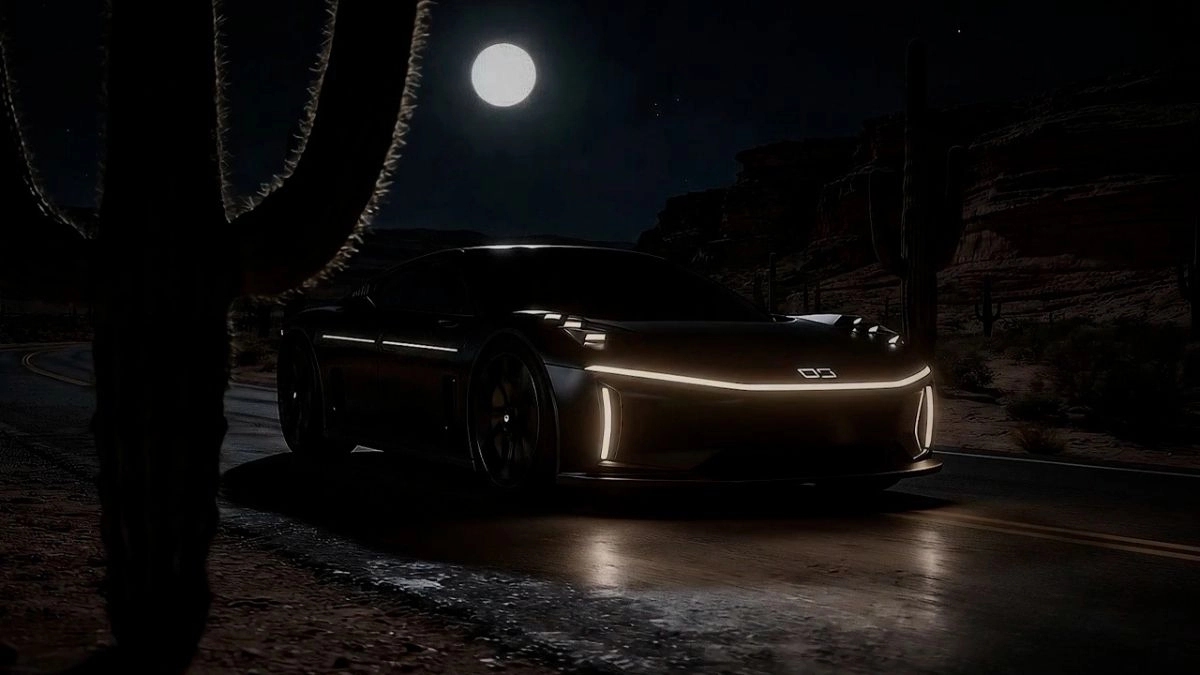
The DarkSky One, a concept car that proposes the exact opposite of what is expected, is a product of this important viewpoint. Instead of attempting to walk out at night, it blends in with it.
It doesn't want to be intimidating visually, but rather to make its gentle effect as minimal as possible for safe driving. Its display not just introduces a new design, but it also sparks a heated debate about how we view the nighttime world around us. DarkSky International, a company that has spent years researching the effects of light pollution on people's health, road safety, and communities, is located behind this plan. Its foray into electrical design is not intended for the business sector, but rather to reevaluate concepts that seemed invincible. a design that disseminates electrical tradition. The DarkSky One takes a dramatic stance: reducing the visibility of the vehicle itself, in contrast to other contemporary prototypes that are loaded with screens, beautiful LED lights, and intense light signatures. The main concept is straightforward but destructive. Existing light systems frequently cause unwanted side effects, such as eye strain, brightness, contrast lost, and poor adaptation to shadow, according to DarkSky. They frequently exacerbate these issues rather than solve them.
The DarkSky One was designed as a "night machine," operating in low-light conditions without compromising the vehicle's or the environment's healthy visual balance.
technology that just makes its point when it matters
The development of the prototype was the result of a global collaboration between Tokyo-based Chinese electrical architecture firm Phiaro, New York-based creative company Bray &, Co. , and DarkSky International.
One of the vehicle's most important technical characteristics is the intelligent lighting system, which consists of LIDAR ADAPT and All Beam Adaptive Driving Light ( ABADL).
Both techniques collaborate to perform a real-time path analysis.
With this information, the headlights precisely adjust their power, form, and direction to prevent projecting unnecessary light onto areas that don't provide the driver with important information.
This program concentrates light only on crucial points of the road, contrasting with standard headlights, which cover wide areas in equally. This enhances light, improves level perception, and preserves the animal eye's normal sensitivity to darkness.
a non-reflective system made of metal
Beyond the visual method, the DarkSky One's beliefs extends. The actual vehicle's appearance was intended to be" silent".
Its exterior is done using a matt black paint with a micro-textured pattern known as DS1, which was created to capture scattered light and reduce surface reflections. This finish drastically reduces the glare of another road signs, streetlights, and headlights.
Additionally, advanced fragmentation and mirror control principles are applied to windows, sections, and exterior surfaces.
The goal is to get rid of dazzling light, which frequently turns the driver off and causes confusion on long-distance trips.
The end result is a car whose image appears to disappear into the shadows, about as though it has been absorbed by its surroundings, allowing the nightscape to eventually emerge without any excessively artificial interference.
The project's purpose
DarkSky International's vision doesn't want to glorify darkness as an lack; instead, it redefines it as a practical and useful component of contemporary design.
Ruskin Hartley, the company's CEO, put it simply:" DarkSky One illustrates shadow not as something to be eliminated, but as a design opportunity," "better light doesn't mean more light, but lighting with precision, intelligence, and respect for the environment. "
This position is in line with recent studies on physical ergonomics, which show that human eyes perform better in settings with moderate contrast and handled light, particularly when driving for a long distance.
A design with historical, no business, goals
The DarkSky One was not intended to compete with the latest sports or electric models or to reach dealerships. Its goal is more general: to start a conversation about the effects of artificial lighting on current mobility.
This car raises the miserable but important question: Are we lighting for safety or out of practice in a world where places are getting brighter and nights getting shorter?
The prototype serves as a rolling lab that demonstrates that there are practical professional alternatives to extreme brightness without sacrificing presence or protection.
This news has been tken from authentic news syndicates and agencies and only the wordings has been changed keeping the menaing intact. We have not done personal research yet and do not guarantee the complete genuinity and request you to verify from other sources too.