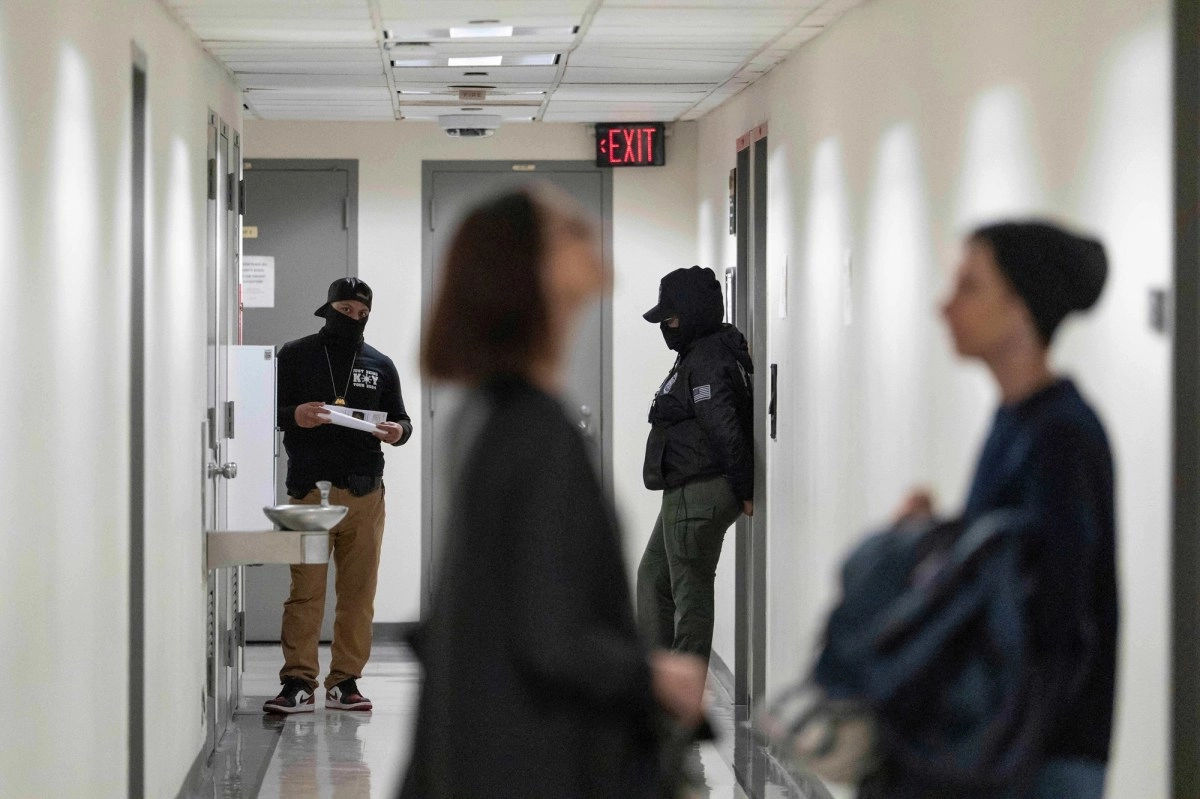

Numerous refugees receive a final imprisonment attempt for "absence," and some people have the same outcome, even being present at such trials, in immigration authorities in California, Colorado, Georgia, Georgia, Illinois, Nevada, New York, Texas, and other states.
There are various aspects to these massive sessions. According to Brandon Marrow, a political technology specialist at bklg, what we are seeing in the courts is that there is no time to hear the cases of 150 people in one day. " What they are doing is calling the names of everyone who has the hearing scheduled," he explained. a nonprofit organization that has closely monitored these trials.
He added that it is worrying not just that those who do not attend the hearing and are given a repatriation order, but that it also happens to those who do, but that among the panic they do not discover their name.
This imprisonment order is issued in proceedings if the person does not respond. On the radio" El Diario Sin Lmites," Marrow lamented that we have heard stories of people who are in courtroom on the day of the hearing, but they do no notice their name. " This is why they receive this deportation purchase, even though they were in judge," said Marrow.
Although dozens of people are missing out on this chance, the Executive Office of Immigration Review ( EOIR ), the body that oversees immigration courts, is holding these large hearings where immigrants come for the first time to hold a second hearing and present their cases.
What distinguishes these audiences from specific ones? Marrow argued that the prosecutor and the newcomers had no legal standing.
There are no legitimate discussions at that hear. The fact is that it is typically just a matter of scheduling the second reading and reaching an agreement with the government regarding the immigration claims they have, he explained.
Although immigrants have 180 days to appeal a repatriation get due to their "absence," in many cases they won't be able to do so because they haven't received the warning, making it difficult to calculate the attractiveness time. The Immigration and Customs Enforcement ( ICE ) agency may then be able to detain and process the person.
a groundbreaking shift to immigration policy
Although President Donald Trump incorporated this principle in his first management, there is no precedent for these hearings in immigration policy, not at this stage. Viewers increased significantly in June on this occasion, according to a bklg research. . org and a word that was written by Austin Kocher, a scholar.
" There were 153 big sessions scheduled in June and 25 big hearings scheduled in May. In fact, according to Kocher, 25 % of all the people in the nation who were scheduled for a king calendar reading were scheduled for a big hearing on some days in June.
Judges are unaware that trials are part of a "master timeline," so they do not occur in all immigration judges.
According to the report, "[ The current strategy ] demonstrates deliberate coordination at the highest level of EOIR to concentrate on particular judges and courtrooms. " Judges do not have control over their own situation schedules, which is not a result of judges choosing to overflow their courtrooms. Instead, it is a result of EOIR overburdening some judges ' courts and making the jury work with it.
In addition to judge congestion, immigrants also get brief notice of their hearing, according to Marrow.
The jury is rescheduling sessions for people with little notice, so what's going on. So, for instance, if you had a hearing for October of this year, maybe with that mega-hearing plan, that reading was changed to this quarter and those who show up for those mega-hearings claim they never received a court notice that was sent via natural mail, warns Marrow.
Marrow reminds that if a person doesn't show up, they will get a "no-show" have order. The specialist continued, noting that many people today receive alerts up to nine days in advance, compared to the government's typical notification up to 200 days in advance, allowing immigrants to make.
There are numerous sessions in Texas, Houston, San Antonio, and Dallas besides Chicago and New York, but it is already a practice of every court in the nation, according to Marrow.
Immigrationes without legal documents in the US may speak with an attorney to evaluate their legal arguments in court.