
Artificial knowledge is frequently described as anything simple, quick, and unknown. A problem, an answer, a more accurate search, a video in the cloud, or an image created in seconds. Pure genius. However, there is a side to that modern experience: there is a massive, physically significant, and frequently discussed infrastructure: data centers.
That hidden price is starting to become a social issue in Texas. According to a poll conducted by the University of Texas/Texas Politics Project, 56 % of registered voters oppose the construction of data centers in their area, compared to 29 % who back them. The opposition is even more severe in rural areas, where 62 % of people voted against them.
The climate has changed in a position that has long been seen as a haven for significant modern investments. Texas wants to be the artificial intelligence craze's character, but some areas are beginning to wonder what they will get paid and who will foot the bill.
Why are information centres expanding so quickly?
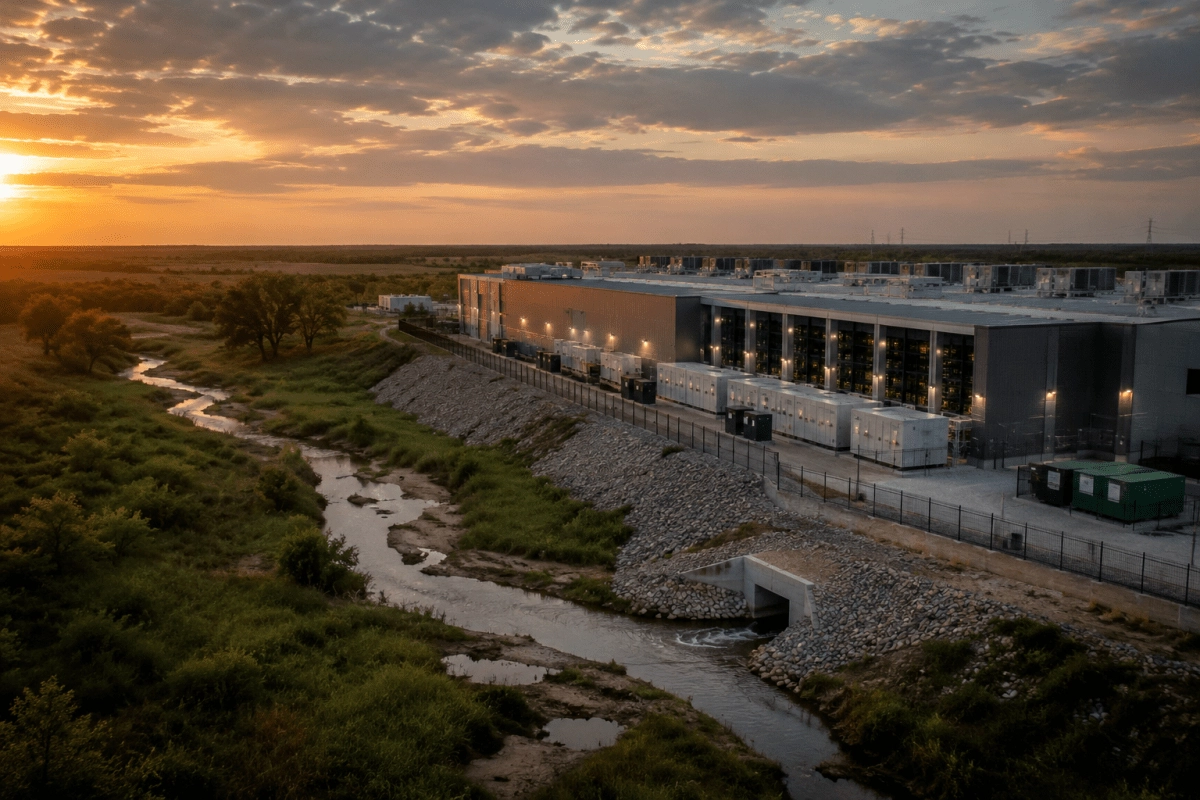
A data center is a creating, or collection of houses, that is stuffed with servers, electrical appliances, cooling devices, and high-capacity links. There are also stored and processed information for use in email, photos, streaming services, cloud services, economic transactions, portable applications, and, more recently, artificial intelligence tools.
The growth of AI accelerated demand. Training and operating advanced models requires enormous amounts of computation. That calculation needs servers. And those servers need constant electricity, cooling, power backup, land, water and new network connections.
Therefore, although we talk about “the cloud”, the cloud is not in the air. It is in giant buildings, often located in counties where land is cheaper, local regulation is limited and communities do not always have enough power to negotiate conditions.
Texas, epicenter of the new boom
Texas is emerging as one of the largest data center markets in the United States. An analysis by The Texas Tribune identified at least 248 planned projects in the state. The expansion is associated with the growth of technology companies, digital services and new demands for artificial intelligence.
The appeal of Texas is clear: available land, a business-friendly economy, strong energy infrastructure, population growth and proximity to large urban markets. But those same factors are generating tension.
Opponents fear that the advancement of data centers will strain the power grid, increase water demand, generate noise, raise infrastructure costs and leave limited benefits for the communities that receive them.
The industry, for its part, maintains that these projects bring investment, jobs during construction, tax revenue and a strategic position for the digital future.
The electricity problem
One of the main questions is electricity consumption. Data centers require power 24 hours a day. And centers designed for artificial intelligence can be in much higher demand than traditional digital facilities.
The International Energy Agency estimates that global electricity consumption in data centers could more than double by 2030. According to that organization, artificial intelligence will be one of the main drivers of this growth.
In Texas, the discussion is especially sensitive because the power grid already faces spikes in demand during heat waves, storms, residential and industrial growth. Adding large consumers may require new lines, substations, additional generation and backup systems.
The question that worries many residents is not only whether there will be enough electricity. It is who will pay for the infrastructure necessary for these projects to connect to the network.
Gov. Greg Abbott recently called for data centers to shoulder the costs of their expansion and not shift that burden to residential consumers. He also proposed reviewing tax benefits and requiring annual reports on water and electricity consumption.
Water, the other big concern
Water is the other critical point. Data centers generate constant heat and need cooling systems to prevent servers from being damaged. Some facilities use more efficient systems or recirculate water, but others may require large volumes, especially in hot climates.
A report from the Houston Advanced Research Center warned that existing data centers in Texas currently consume an estimated 25 billion gallons of water per year, including power generation and cooling. By 2030, that figure could rise to a range of between 29 billion and 161 billion gallons annually.
The concern is not minor in a state with recurring droughts, pressured aquifers and rural communities that already compete for water for housing, agriculture, livestock and industry.
For many residents, the debate is simple: If water is limited, why should a community use it to cool servers for big tech companies?
You can see: Meta offers free training and guaranteed employment to build artificial intelligence data centers in the US.
Many resources, few permanent jobs
Another point of conflict is employment. Data centers can generate a lot of work during the construction stage, but once operational, they do not always require large permanent staff.
This fuels rejection in communities that see enormous projects, with high resource consumption, but with fewer stable jobs than a traditional industrial investment usually promises.
The dilemma is especially strong in rural areas. A county may get pressure on roads, water, electricity and utilities, but not necessarily get a commensurate job transformation.
Tax benefits under review
Tax incentives also remained at the center of the debate. Texas provided tax breaks to attract data centers, but the political climate began to change. Abbott proposed eliminating exemptions considered obsolete or unnecessary and reviewing the scheme to prevent taxpayers from ending up subsidizing companies with enormous financial capacity.
Critics' argument is that the state should not give away benefits to industries that consume large local resources and generate potential costs for the electrical grid or water supply.
Proponents respond that incentives help attract investment that might otherwise go to other states and that data centers also pay local taxes, boost construction and infrastructure and position Texas in the digital economy.
Why the rejection is not only against technology
Rejection of data centers does not necessarily mean rejection of the internet, the cloud or artificial intelligence. In many cases, the opposition has more to do with territory than technology.
Neighbors want to know how much electricity these projects will use, how much water they will need, who will pay for connections to the grid, what noise they will generate, what will happen to taxes and what mechanisms there will be to supervise the companies.
They also demand transparency. One of the most repeated criticisms is that communities do not always receive clear information before projects move forward.
In that sense, data centers are becoming the physical face of a broader debate: artificial intelligence promises efficiency, productivity and the future, but its infrastructure has concrete impacts on specific places.
That is why the underlying question is no longer whether Texas wants to be a center of artificial intelligence. The question is under what conditions.