

Ukrainian children whom Russia trains to fight against their own country
Tens of thousands of Ukrainian children living in occupied territories have joined Yunarmiya, a nationwide Russian military youth organization
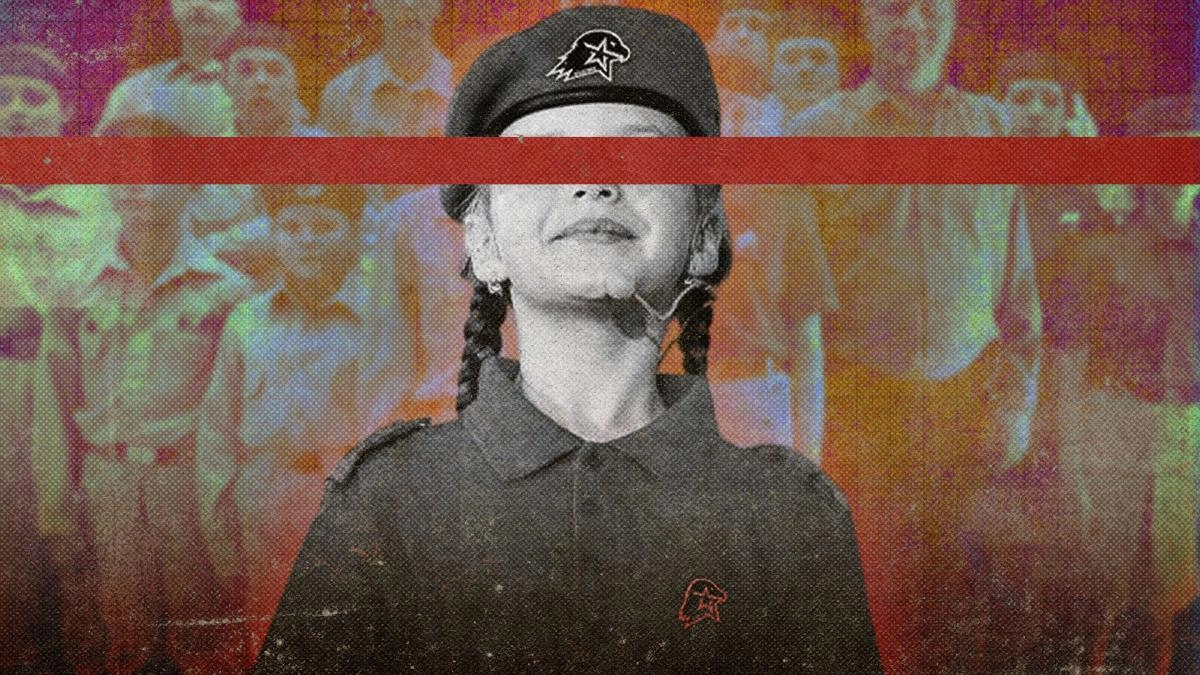

At a school in the Kherson region of southern Ukraine, occupied by Russia, several children stand silently while some of their classmates—dressed in beige military uniforms and red berets—receive medals and gifts.
These uniformed children are members of Yunarmiya—or Young Army—the youth movement military-patriotic of national scope in Russia. The youngest recruits are just 8 years old.
Those outside the organization observe how Yunarmiya members enjoy privileges: separate meals in the dining hall, better food, and special treatment from teachers.
Refusing to Join
Serhiy, a 12-year-old student, told the BBC that he refused to join Yunarmiya and, as a result, was punished with, among other things, lower grades.
“They got the best grades even though they didn’t know the material,” he said, referring to Yunarmiya recruits at his school.
Serhiy changed schools several times during the three years he lived under Russian occupation.
Now resettled in Ukrainian-controlled territory, he estimates that up to half of his former classmates were enrolled in militarized programs, either through Yunarmiya or cadet classes run by the Investigative Committee from Russia (a unit that investigates serious or priority crimes in Russia), or in special guard units overseen by Rosgvardiya, a security agency independent of the Russian military but controlled by the state.
Critics say these programs are aimed at preparing children for military service in Russia or for joining other security forces.
Participants receive special uniforms and are sent to training camps in Russia during school holidays.
What are the origins of Yunarmiya?
Yunarmiya was founded in 2016 by Sergei Shoigu, then Russian Defense Minister and a close ally of President Vladimir Putin.
Currently, the organization is estimated to have 1.8 million children in its ranks, the vast majority in Russia, including 43,000 in occupied Ukraine.
The organization is believed to be actively recruiting more Ukrainian children in all Russian-occupied regions.
According to Vladislav Golovin, leader of Yunarmiya, by May 2025, more than 120,000 of its graduates were serving in the Russian armed forces.
Golovin is a Russian marine who participated in the siege of Mariupol, a city in southern Ukraine that suffered intense Russian shelling during the first weeks of the full-scale 2022 invasion. Thousands of civilians were killed and tens of thousands of homes were destroyed.
Golovin says Yunarmiya's mission is to instill “the presence of Russia in every step” of a child's life.
Children are taught to kiss the Russian flag, sing the national anthem, and assemble and handle weapons. They are also encouraged to fight.
One student recalled being told that age didn't matter: if Ukraine “attacks Russia,” they must take up arms, the young recruits were told.
Golovin is also deputy director of another youth organization, known as the Movement of the Firsts, which promotes the “traditional spiritual and moral values” of the “Russian world.”
Recruitment of Ukrainian Children
Following Russia's annexation of four Ukrainian regions in 2022, Yunarmiya began the mass recruitment of children in the area.
In the Donetsk region alone, the BBC estimates that there are currently 180 official Yunarmiya units.
In Mariupol, local authorities openly incite young people to prepare for war, using slogans such as “fight evil” and “stand firm.”
According to the Ukrainian Center for Combating Disinformation, some schools have created “Yunarmiya classes” and pressure parents to enroll their children under threat of fines or restricted access to school services.
In compulsory school classes, as well as those taught by Yunarmiya—both in the occupied territories and in Russia—Ukraine is often portrayed as a neo-Nazi state, and its existence as a nation is denied.
Children are taught that Russia is powerful and that Ukraine caused the collapse of the Soviet Union more than 30 years ago.
Outside the classroom, social media Yunarmiya showcases a wide range of military training and related activities: from target shooting and first aid to searching for the remains of soldiers from World War II. Between January and August 2025, the BBC estimates that the group organized at least 1,275 such events in the Donetsk region.in occupied Ukraine.
Here, children meet with Russian military recruiters and veterans of the so-called Special Military Operation (Russian term referring to the invasion of Ukraine).
Participants receive training in the use of weapons, including flamethrowers, machine guns, and grenades; in drone piloting and hacking satellite communication systems.
The BBC estimates that more than 15% of the activities at these events are non-military, such as cleaning parks or visiting museums, but even these often include ideological messages.
The BBC found that these events often focus on World War II and draw parallels between the Nazis and what Russian authorities call “neo-Nazis” in Ukraine.
These camps host and train children from both occupied Ukraine and Russia.
Researchers at the Yale School of Public Health identified 210 such centers, of which approximately 20% are dedicated exclusively to military training.
Centers established by Russian authorities teach combat tactics, engineering, and war medicine.
Ukrainian children in the occupied territories also participate in Russian military competitions such as Tsarnitsa 2.0, which are held in schools and aim to simulate combat conditions.
Yunarmiya members also regularly visit schools to recruit new members by organizing events.
Possible human rights violations
Ukrainian authorities have stated that Russia has deported at least 19,600 Ukrainian children to its territory since the start of the conflict, and have documented cases of young Ukrainians being forcibly recruited by the Russian army upon turning 18.
In March 2023, the International Criminal Court issued arrest warrants for President Vladimir Putin and Maria Lvova-Belova, the Russian Commissioner for the Rights of the Child, accusing them of the forced transfer of Ukrainian children.
The United Nations has stated that these transfers constitute war crimes. Moscow denies that they were carried out by force and claims they are done to protect the affected children. Russian authorities also deny having obstructed the return of Ukrainian children to their homes. Ukraine has managed to repatriate more than 1,500 children to the country, with the help of organizations such as Save Ukraine. International efforts, including the work of First Lady Olena Zelenska and Qatari mediation, continue. Compulsory military service is also reported in the occupied territories, with the last round taking place at the end of 2024.According to Ukrainian military intelligence.
As a result, it is believed that Ukrainians have died fighting against their own country.
Human rights activists claim this is part of Moscow's strategy to divide Ukrainian society and create a base for mobilization.
The Ukrainian prosecutor's office is investigating several Yunarmiya leaders for militarizing children, in contravention of the laws and customs of war.
International law prohibits the recruitment of minors into the armies of occupying forces, and therefore Russia may be violating multiple treaties.
Yunarmiya has not responded to these accusations, but Russian authorities have always maintained that the children who are part of the organization are there voluntarily and strive to become good Russian citizens and future defenders of Russia.
The names of some contributors to this article have been changed to protect their identities. Additional information from Mariana Matveichuk.
This news has been tken from authentic news syndicates and agencies and only the wordings has been changed keeping the menaing intact. We have not done personal research yet and do not guarantee the complete genuinity and request you to verify from other sources too.