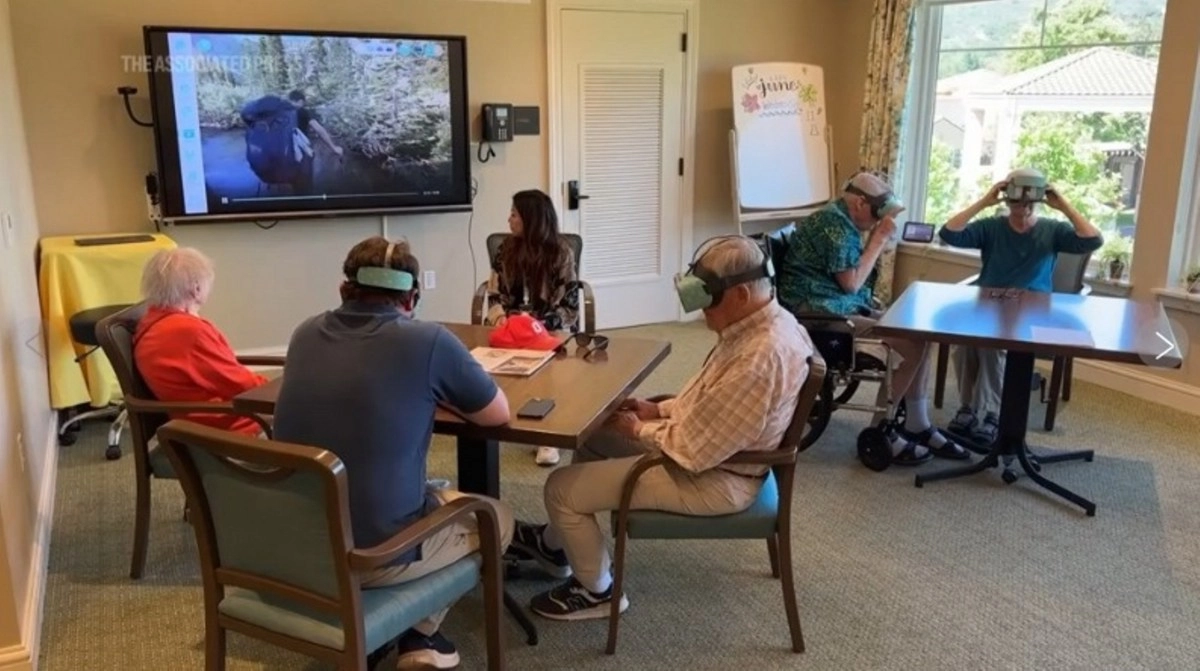

At The Terraces, located in Los Gatos, California, residents in their 80s and 90s participate in virtual reality (VR) sessions through glasses that allow them to explore distant destinations and relive memories. This technology is provided by Rendever, which seeks to improve cognition and socialization in senior living communities in the United States and Canada. Residents using the virtual reality headsets not only enjoy virtual adventures but also experience an emotional connection to their memories. Sue Livingstone, 84, highlights how the experience of visiting her childhood neighborhood in New York City brought back precious memories. Similarly, Ginny Baird, 81, said after the virtual immersion: “We were able to dive underwater and didn't even have to hold our breath!” reported the Associated Press (AP). Social and Cognitive Impact: The use of virtual reality also promotes social connection among residents. Adrian Marshall, director of community life, mentions that curiosity about VR acts as a catalyst for interactions, allowing residents to share experiences and establish meaningful connections.
“The stereotypes that older adults are unwilling to try new technologies need to change, as they are willing and eager to adapt to technologies that are meaningful to them,” said Bhowmick, a researcher at the University of Illinois at Urbana-Champaign who is examining the use of virtual reality with older adults.
“In addition to helping them relieve stress, entertain themselves, and connect with others, there is an intergenerational aspect that could help them forge relationships with younger people who discover they are using virtual reality and say, 'Grandpa is so cool!'” he adds.
Potential of the technology in the future
Rendever, supported by a grant from the National Institutes of Health, is investigating ways to reduce social isolation among the elderly.
Experts suggest that, although technology should be used in moderation, it can be a valuable tool for improving cognitive function, memory, and sociability in older adults.
Virtual Experiences Among Older Adults
The most popular virtual experiences among older adults are virtual reality experiences that simulate travel and adventures, such as swimming with dolphins or hot air balloon rides. These activities foster social connections in retirement communities and revive memories of youth.
Other favorites include virtual visits to birthplaces, meditation in relaxing environments, and immersive musical performances.
Risks Associated with Prolonged VR Use
Prolonged use of virtual reality in older adults carries specific risks due to their increased physical and sensory vulnerability. These include adverse effects such as cybersickness and eye strain, which can be exacerbated with extended sessions.
Main Risks. Cybersickness, characterized by dizziness, nausea, blurred vision, and physical discomfort, is more common in older adults due to prolonged use of head-mounted displays (HMDs), according to scientific reviews. Persistent eye strain and musculoskeletal problems, such as neck or back pain, arise from continuous immersion and static posture. Vulnerability factors: Older adults with cognitive impairment or conditions such as Parkinson's disease face a higher risk of adverse symptoms, although studies show general tolerance in short sessions (10-15 minutes). Ophthalmologists warn of dry eye, decreased blinking, and possible worsening of pre-existing visual disorders. Recommendations: Limit sessions to less than 15 minutes per hour with breaks, supervise use, and avoid use in people with vestibular or severe visual problems to minimize impact. You may also be interested in:
Risks Associated with Prolonged VR Use
Prolonged use of virtual reality in older adults carries specific risks due to their increased physical and sensory vulnerability. These include adverse effects such as cybersickness and eye strain, which can be aggravated with extended sessions.
Main Risks. Cybersickness, characterized by dizziness, nausea, blurred vision, and physical discomfort, is more common in older adults due to prolonged use of HMDs, according to scientific reviews. Persistent eye strain and musculoskeletal problems, such as neck or back pain, arise from continuous immersion and static posture.
Vulnerability Factors. Older adults with cognitive impairment or conditions such as Parkinson's disease face a higher risk of adverse symptoms, although studies show general tolerance in short sessions (10-15 minutes). Ophthalmologists warn of dry eye, decreased blinking, and possible exacerbation of pre-existing visual disorders.
Recommendations.
Limit sessions to less than 15 minutes per hour with breaks, supervise use, and avoid use in people with vestibular or severe visual impairments to minimize impact.You may also be interested in: