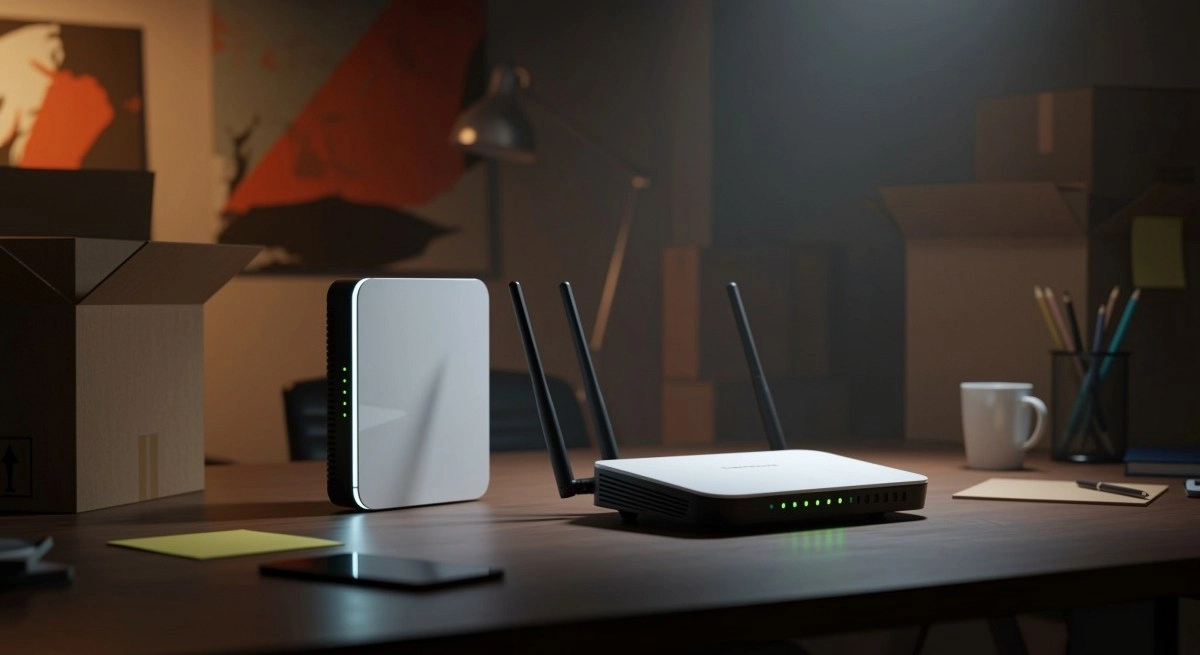

Before you spend money on a new router, there is something you should know. That little device that you've spent weeks blaming for all your digital ills may be completely innocent. The truth is that the internet connection is a much more complex ecosystem than it seems, and in many cases speed or stability problems have their origin in places that you would not think of checking.
Changing the router can be a valid solution in some cases, but jumping into buying a new one without first investigating the real causes is, basically, throwing money away.
The network that reaches your home passes through multiple points before you can watch a video on YouTube or join a video call. Each of those points can become a bottleneck. Understanding where the real problem is is the first step to solving it, and spoiler: the router is just one of the many actors in this story.
1. The plan you have contracted may be limiting you more than you think
This is the most silent reason and also one of the most underestimated. Many users complain about slow speeds without knowing that the plan they have contracted with their internet provider simply does not provide more. If you have ten devices connected simultaneously at home, all competing for bandwidth, the problem is not the router but the amount of data your provider is giving you. A next-generation router cannot magically multiply the speed coming from the street.
In addition, there is something that few openly comment on: network congestion during peak hours. At night, when the entire neighborhood is at home watching streaming series or playing online games, your internet provider's nodes can become saturated and the speed drops noticeably for all users in the same sector. This has nothing to do with your equipment at home. It is a problem of the operator's infrastructure. In those moments, changing the router will not change anything at all.
The smartest thing before making any purchase is to do a speed test directly on the modem, with cable, without going through the router. If you already have low speed there, then you already know that the problem is upstream of your device.
2. The devices you use to connect also have their share of responsibility
Here comes an inconvenient truth: the device you connect from has as much weight in the equation as the router itself. A six-year-old laptop, a cell phone with a worn-out WiFi chip, or a low-end smart TV may be limiting your connection speed dramatically, even if your router is the most advanced on the market. WiFi chips in older devices support slower standards, such as WiFi 4, and even if the router supports WiFi 6, the final speed will always be determined by the weakest link in the chain.
And it's not just about the age of the hardware. Apps running in the background on your devices may be consuming bandwidth without you noticing. Automatic operating system updates, cloud backup services, scheduled downloads... all of this shares the same data channel that you are trying to use for work or entertainment. Closing those apps or scheduling them for off-peak times can significantly improve your experience without touching any cables or router settings.
To this we must add malware. An infected device may be using your connection to send data, participate in distributed attacks, or simply run processes that constantly consume network resources. Checking the security status of your equipment is as important as checking the WiFi signal.
3. Physical interference in your home is more powerful than you imagine
The WiFi signal travels through the air, but that doesn't mean nothing stops it. Walls, concrete floors, appliances, and even certain types of furniture can absorb or deflect radio waves, reducing signal strength significantly. A working microwave, for example, emits on the same 2.4 GHz frequency as many routers, creating direct interference. Cordless phones, Bluetooth speakers, and wireless security cameras are also known sources of interference.
But even if there are no appliances involved, living in a building or area with a high density of WiFi networks can affect your connection. When many routers in the neighborhood transmit on the same channel, the signal becomes saturated. This is solved by changing the transmission channel in the router settings, not by changing the router itself. Free tools like WiFi Analyzer can show you which channels are most congested in your area and which would be best to use.
The physical location of the router in your home also falls into this section, although the distinction is subtle. It's not that the router is bad, it's that it is poorly located. A premium router placed in a drawer or behind the television will perform worse than a basic model well positioned in the center of the home. The signal has to travel less distance and cross fewer obstacles to reach your devices.
The next time the connection becomes slow or unstable, before thinking about the router, it is worth doing a small audit of the entire environment. Review the contracted plan, evaluate the status of the devices you use, identify sources of interference at home and monitor what your applications consume in the background. Often the solution is much closer and much cheaper than a new router. And in the event that after all that the problem persists, you will have real arguments to justify changing equipment.